Herbed Salmon and Creamy Pasta
Highlighted under: Instant Meals Recipes
I absolutely love this Herbed Salmon and Creamy Pasta recipe! The combination of tender salmon with aromatic herbs and a luscious creamy pasta sauce makes for a captivating dish that’s not only tasteful but also visually stunning. Whether it's a special occasion or just a weeknight dinner, this recipe is sure to impress anyone at the table. I’m excited to share how the infusion of fresh herbs elevates the overall experience and how simple techniques can bring out the best flavors in each ingredient.
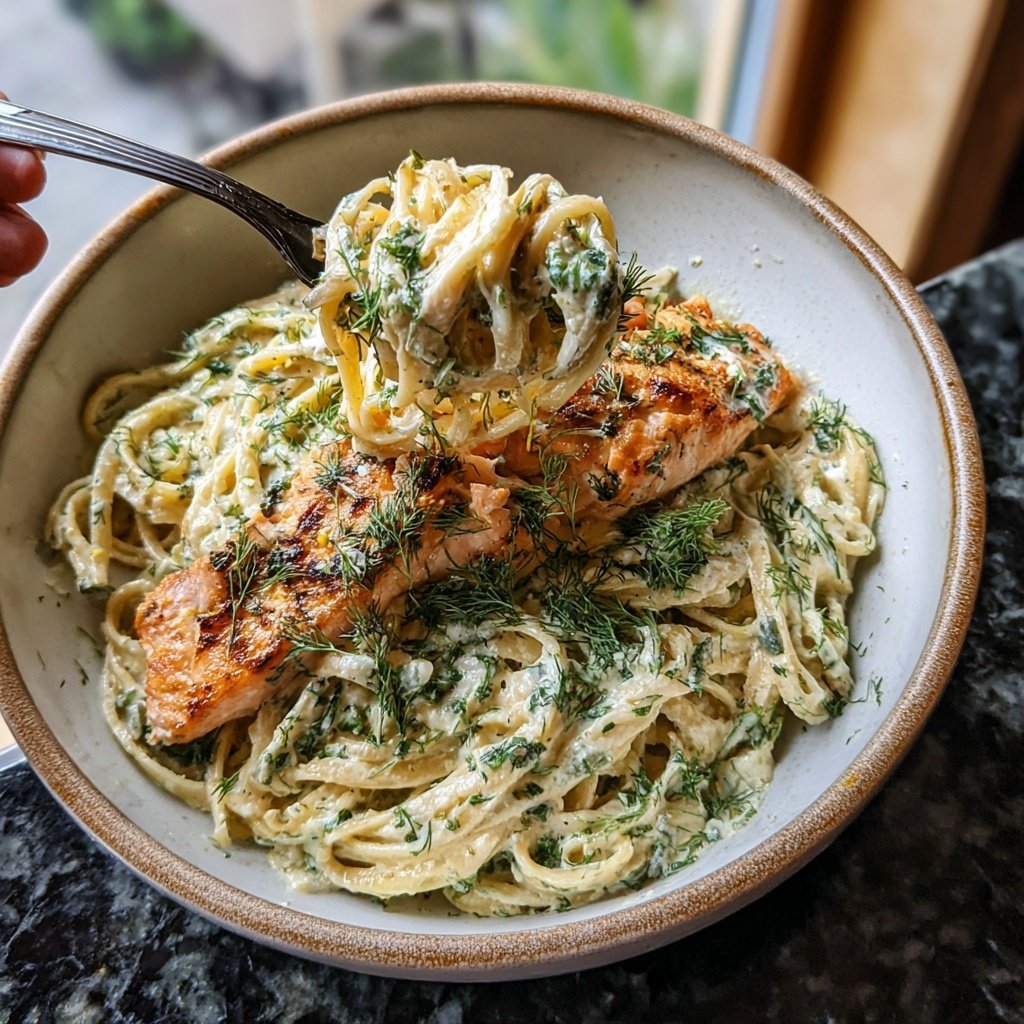
Preparing this dish was an adventure in flavor for me. The moment I mixed the fresh herbs with the salmon, I knew it would be something special. I decided to use a blend of dill and parsley, which complemented the richness of the salmon perfectly. The key to ensuring the herbs retained their vibrant flavor was to add them towards the end of the cooking process, which really makes a difference in the overall taste.
One detail I’ve found crucial is the pasta cooking water. Don’t forget to reserve a cup before draining your pasta! This starchy water helps bind the sauce beautifully, creating a creamy texture that clings to your pasta without being too heavy. It made the dish feel luxurious without any extra effort!
Why You'll Love This Recipe
- The herbaceous aroma fills your kitchen, enticing everyone.
- Creamy sauce that provides a comforting feel with every bite.
- Versatile dish suitable for both elegant dinners and casual meals.
Elevating Your Salmon
The hero of this dish, salmon, not only brings flavor but also healthy omega-3 fatty acids. When prepping your salmon, opt for fillets that have a bright, vibrant color and firm texture. Instead of using just salt and pepper, the herbs infuse the fish with a delightful freshness. Fresh dill and parsley pair beautifully together, enhancing the salmon's natural flavor. Baking the salmon at the right temperature ensures it remains juicy; aim for an internal temperature of 145°F (63°C) for perfect doneness.
Always remember to pat the salmon dry before seasoning. This allows the olive oil and herbs to adhere better, creating a lovely crust. If you want to try variations, substitute the dill with tarragon for a slightly different, but equally delightful, flavor profile. As the salmon bakes, keep an eye on it—you want to see that the edges are slightly golden and the fish flakes easily with a fork for that melt-in-your-mouth experience.
Cream Sauce Secrets
The creamy sauce is where the magic happens in this dish. A good quality heavy cream is crucial; it provides a rich, velvety texture that binds beautifully with the pasta. As you heat the cream, don't let it reach a rolling boil—continue to simmer on medium heat to prevent splitting. Stir in the Parmesan cheese until it melts smoothly into the sauce, ensuring the flavors meld together nicely. If you find your sauce too thick, gradually add the pasta water until you achieve the perfect consistency.
Lemon juice not only adds brightness but also balances the richness of the cream. If you're out of fresh lemon, a splash of white wine can also be a great substitute. For those who want a hint of heat, a pinch of red pepper flakes can elevate the richness of the sauce. And if you're looking to lighten the dish, consider substituting half of the heavy cream with low-fat Greek yogurt or cashew cream for a similar texture with fewer calories.
Serving Suggestions
Pair this Herbed Salmon and Creamy Pasta with a simple arugula salad dressed in lemon vinaigrette to cut through the dish's richness. This not only offers a fresh contrast but also adds a layer of flavor that complements the meal beautifully. For an extra touch, you can top the dish with additional fresh herbs or a sprinkle of lemon zest for added brightness and visual appeal.
If you're making this dish for meal prep, consider storing each component separately until you're ready to eat. The salmon will stay fresh in the fridge for up to three days, and the creamy pasta can be reheated gently in a skillet over low heat. To avoid overcooking the salmon when reheating, consider enjoying it at room temperature or slightly warmed, bringing out the best texture and flavor.
Ingredients
Gather these ingredients to create a delicious meal:
For the Salmon
- 4 salmon fillets
- 2 tablespoons olive oil
- 1 tablespoon fresh dill, chopped
- 1 tablespoon fresh parsley, chopped
- Salt and pepper to taste
For the Pasta
- 8 ounces fettuccine or tagliatelle
- 1 cup heavy cream
- 1/2 cup grated Parmesan cheese
- 1 garlic clove, minced
- 1 tablespoon lemon juice
Ensure all ingredients are fresh for the best flavor.
Instructions
Follow these steps for a successful dish:
Prepare the Salmon
Preheat your oven to 400°F (200°C). In a baking dish, arrange the salmon fillets and drizzle with olive oil. Sprinkle the dill, parsley, salt, and pepper over the salmon. Bake for 15-18 minutes or until salmon flakes easily with a fork.
Cook the Pasta
While the salmon is baking, bring a large pot of salted water to a boil. Cook the fettuccine according to package instructions until al dente. Reserve 1 cup of pasta water, then drain the pasta and set aside.
Make the Cream Sauce
In a large skillet over medium heat, add a drizzle of olive oil and the minced garlic. Sauté until fragrant, about 30 seconds. Pour in the heavy cream and bring to a simmer. Stir in the Parmesan cheese and lemon juice until combined and slightly thickened.
Combine and Serve
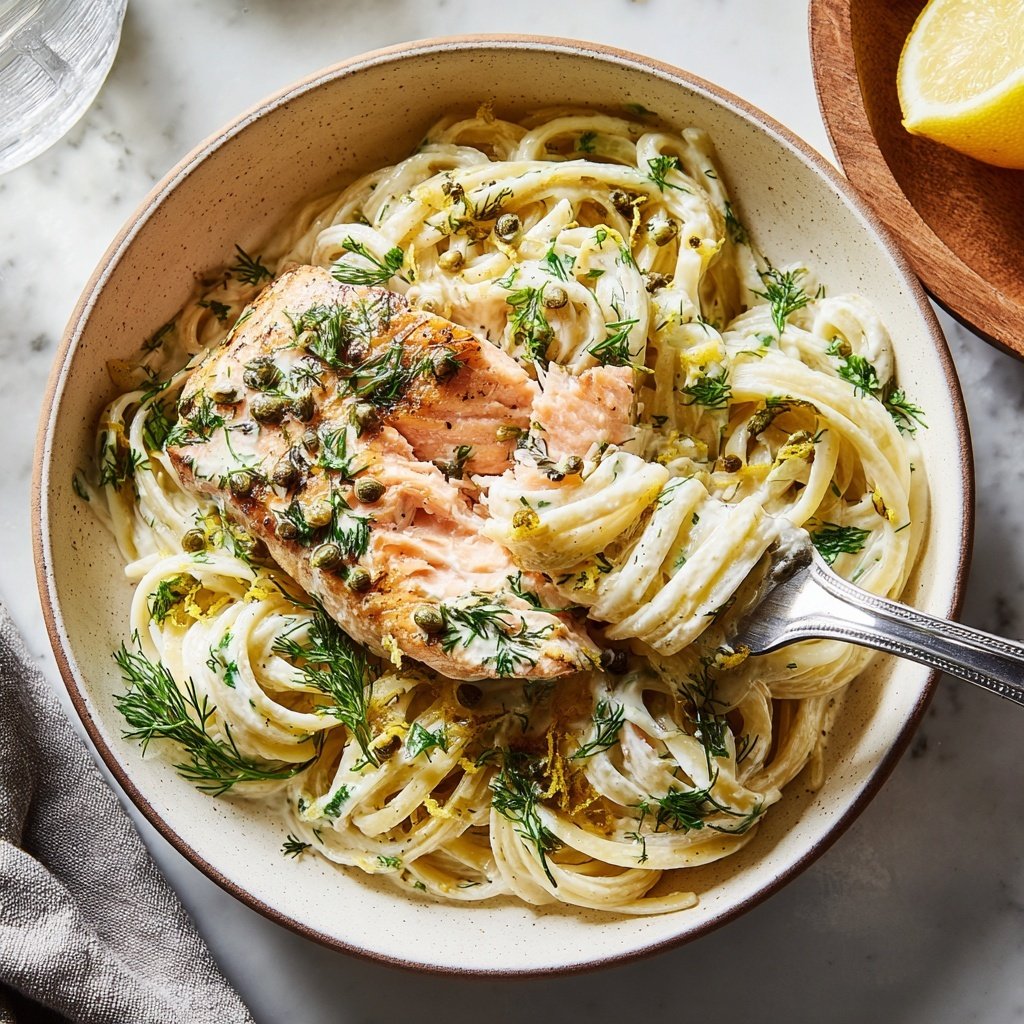
Add the cooked pasta to the skillet with the creamy sauce, tossing to coat. If the sauce is too thick, gradually add the reserved pasta water until you reach your desired consistency. Serve the creamy pasta topped with the baked salmon.
Enjoy your meal!
Pro Tips
- Make sure to keep an eye on the salmon to avoid overcooking it
- tender fish is key to the dish's appeal.
Ingredient Variations
Feel free to experiment with different types of pasta in this dish; whole wheat pasta or gluten-free options like chickpea or lentil pasta can add a nutritious twist. Just be sure to adjust cooking times accordingly, as they may cook differently from traditional pasta. For those who prefer additional protein, adding shrimp or scallops can complement the salmon nicely and create a more robust seafood pasta.
Herbs play a vital role in lifting the flavors here. If dill and parsley aren’t favorites, consider using basil for a fresh change or even a sprinkle of herbes de Provence for a touch of rustic charm. The key is to balance the flavors—a robust herb like basil can change the dish’s character dramatically but done well, it can be just as delightful.
Cooking Techniques
Mastering the technique of cooking the salmon is crucial. Achieving the right level of doneness is essential; overcooked salmon can become dry and unpleasant. Invest in a reliable instant-read thermometer for checking the internal temperature. Alternatively, watching for the fish to turn from translucent to opaque can be a visual cue that it’s close to done, but reliance on temperature is foolproof.
When preparing the pasta, make sure to cook it just before the sauce is ready. This allows for a seamless integration of flavors. A well-timed pasta toss ensures every strand is coated, maximizing the creamy texture. If you're using gluten-free pasta, which can be a bit more delicate, avoid overcooking to maintain its integrity and chew.
Storage and Reheating Tips
To store leftovers, transport the pasta and salmon into an airtight container as soon as they cool down. Both elements can be stored separately for optimal texture—this way, the salmon doesn't get soggy from the sauce. When properly stored in the refrigerator, they’ll last up to three days without losing substantial quality.
Reheating should be done gently to preserve moisture. Consider using a microwave with short bursts, stirring in between, or a stovetop method on low heat. Adding a splash of cream or pasta water can help revive the sauce's original consistency. Avoid steaming, as it can dry out the salmon or make the sauce unappealing.
Questions About Recipes
→ Can I use frozen salmon for this recipe?
Yes, just ensure to thaw it completely before cooking to achieve the best texture.
→ What type of pasta works best?
Fettuccine or tagliatelle are ideal for the creamy sauce, but feel free to use your favorite pasta.
→ Can I prepare this dish in advance?
You can cook the pasta and make the sauce ahead of time, but it's best to bake the salmon fresh.
→ What can I substitute for heavy cream?
You can use half-and-half or a plant-based cream alternative, though the texture may vary slightly.
Herbed Salmon and Creamy Pasta
Created by: The Ninasrecipes Team
Recipe Type: Instant Meals Recipes
Skill Level: Intermediate
Final Quantity: Serves 4
What You'll Need
For the Salmon
- 4 salmon fillets
- 2 tablespoons olive oil
- 1 tablespoon fresh dill, chopped
- 1 tablespoon fresh parsley, chopped
- Salt and pepper to taste
For the Pasta
- 8 ounces fettuccine or tagliatelle
- 1 cup heavy cream
- 1/2 cup grated Parmesan cheese
- 1 garlic clove, minced
- 1 tablespoon lemon juice
How-To Steps
Preheat your oven to 400°F (200°C). In a baking dish, arrange the salmon fillets and drizzle with olive oil. Sprinkle the dill, parsley, salt, and pepper over the salmon. Bake for 15-18 minutes or until salmon flakes easily with a fork.
While the salmon is baking, bring a large pot of salted water to a boil. Cook the fettuccine according to package instructions until al dente. Reserve 1 cup of pasta water, then drain the pasta and set aside.
In a large skillet over medium heat, add a drizzle of olive oil and the minced garlic. Sauté until fragrant, about 30 seconds. Pour in the heavy cream and bring to a simmer. Stir in the Parmesan cheese and lemon juice until combined and slightly thickened.
Add the cooked pasta to the skillet with the creamy sauce, tossing to coat. If the sauce is too thick, gradually add the reserved pasta water until you reach your desired consistency. Serve the creamy pasta topped with the baked salmon.
Extra Tips
- Make sure to keep an eye on the salmon to avoid overcooking it
- tender fish is key to the dish's appeal.
Nutritional Breakdown (Per Serving)
- Calories: 450 kcal
- Total Fat: 28g
- Saturated Fat: 15g
- Cholesterol: 105mg
- Sodium: 350mg
- Total Carbohydrates: 36g
- Dietary Fiber: 2g
- Sugars: 2g
- Protein: 25g